Irish employers expect a short, factual CV of about two pages, written in plain English, with your most recent job first and clear results under each role. Leave out your photo, date of birth, marital status, religion and nationality: Irish equality law bans hiring decisions on those grounds, so most recruiters prefer not to see them. Interviews are usually competency based, which means you answer with real examples from past jobs. A friendly, modest tone works better than a formal or boastful one.
What goes on an Irish CV
- Name and contact details: phone, email and the town where you live. A full home address is not needed.
- Short profile: three or four lines on who you are and the job you want.
- Work experience: job title, employer, town and country, and month and year. Under each, give three to five lines on what you achieved, with numbers where possible.
- Education and qualifications: the award, the institution, and the year. Add the Irish equivalent level if you know it.
- Skills: software, machines, licences, languages.
- References: "available on request" is normal.
Write "managed a team of 6 nurses on a 30 bed ward" rather than "responsible for the ward". Explain local terms: an Irish recruiter may not know what a Kenyan county hospital or an Indian polytechnic diploma involves, so add one short line of context.
What to leave out, and why
The Employment Equality Acts outlaw discrimination in access to employment on nine grounds: gender, civil status, family status, sexual orientation, religious belief, age, disability, race, colour, nationality or ethnic origin, and membership of the Traveller community. The law also covers recruitment adverts and employment agencies. That is why Irish CVs do not include a photo, age, marriage or children, religion or a passport number. If an interviewer asks about these, you can steer back to your skills, and you can complain to the Workplace Relations Commission if you believe you were treated unfairly.
Show what your qualifications mean in Ireland
Irish employers think in terms of the National Framework of Qualifications, or NFQ, which has ten levels. NARIC Ireland, hosted by QQI, issues free online comparability statements that place a foreign award on the NFQ where possible. Its database covers more than 2,000 qualifications from over 170 countries. QQI warns that new statements can take 12 weeks, so request one before you start applying, then add a line such as "comparable to NFQ Level 8 honours bachelor degree" to your CV.
The cover letter
Many Irish employers still ask for a cover letter. Keep it to one page. Say which job you are applying for, two or three reasons you fit it, and your right to work. If you need an employment permit, say so briefly and honestly. Permits depend on an offer from an Irish employer, and some jobs fall under special eligibility rules, such as the Critical Skills Occupations List or a labour market needs test. Knowing which route applies to your job makes you look prepared.
How interviews work
- Competency questions: "Tell me about a time you dealt with a difficult customer." Use a simple structure: the situation, what you had to do, what you did, and the result.
- Panels: in health, education and the public sector, expect a panel of two to four people, each with a scoring sheet.
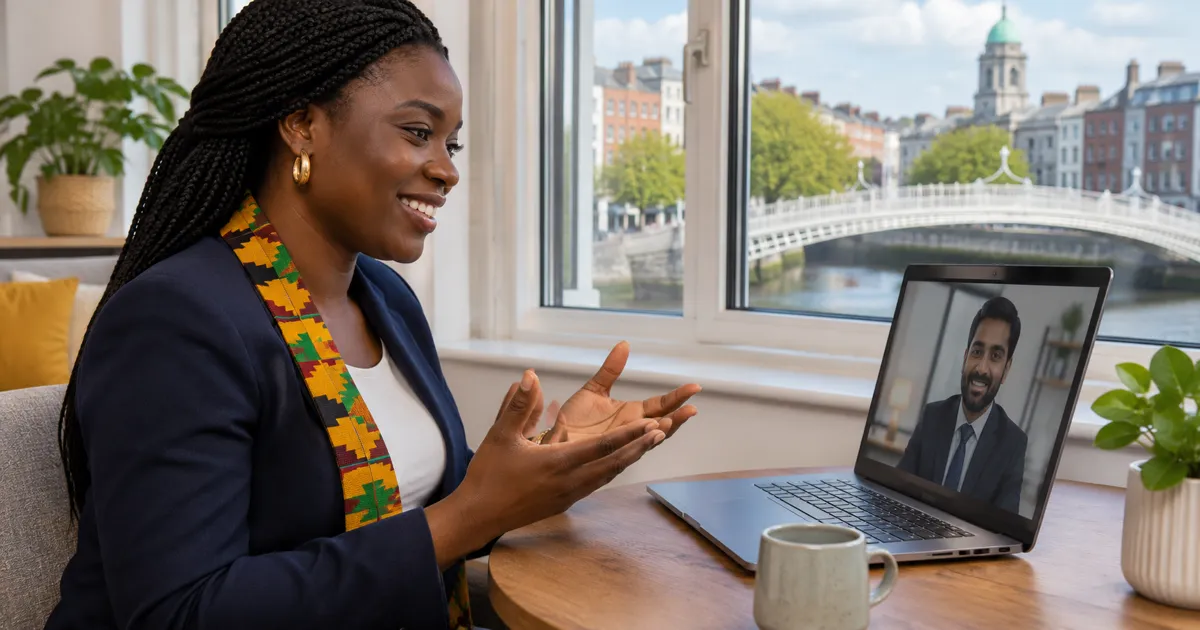
- Video first rounds: common for applicants abroad. Test your camera and sound, and sit somewhere quiet with good light.
- Tone: be warm and direct. Small talk at the start is normal. Saying "we" all the time can hide your own contribution, so say "I" when describing your actions.
- Your questions: prepare two, about the team, training or the first three months.
References and vetting
Employers usually contact two referees, often your last two managers, after the interview. Warn them early and give them the Irish time difference. For work with children or vulnerable adults, such as healthcare, social care and teaching, you will also need Garda vetting, applied for online through the registered organisation that is hiring you. Bring police clearance from each country where you have lived too.
After the offer
Once you start, Irish law requires your employer to give you the core terms of your job in writing within five days, and a fuller written statement of terms within one month. Check that pay, hours and job title match the offer and your permit.
Questions people ask
Should I put a photo on my CV in Ireland?
No. Irish CVs normally have no photo, age, marital status or religion, as equality law bans hiring on those grounds.
How long should an Irish CV be?
About two pages, with your most recent job first and achievements under each role.
How do I show my foreign degree's level in Ireland?
Get a free comparability statement from NARIC Ireland at QQI, which places it on the NFQ where possible. It can take up to 12 weeks.
What is a competency based interview?
An interview where you answer with real examples, explaining the situation, your task, what you did and the result.
Do I need Garda vetting?
Yes for work with children or vulnerable adults. The hiring organisation starts the online application.
Official sources: Workplace Relations Commission: Employment Equality, QQI: Recognition of foreign qualifications (NARIC Ireland), QQI: National Framework of Qualifications, Department of Enterprise, Tourism and Employment: Employment permit eligibility, An Garda Síochána: Garda National Vetting Bureau, Workplace Relations Commission: Terms of employment