Korean employers expect a tidy, factual CV, usually on a fixed form, followed by one or more interviews where attitude, reliability and fit with the team matter as much as skills. Many large companies still ask for a photo and a self introduction essay. At the same time, Korean law now stops companies with 30 or more staff from asking for some personal details, such as your height, weight, marital status or your parents' jobs. Knowing both the habits and the limits helps you prepare.
Two very different hiring routes
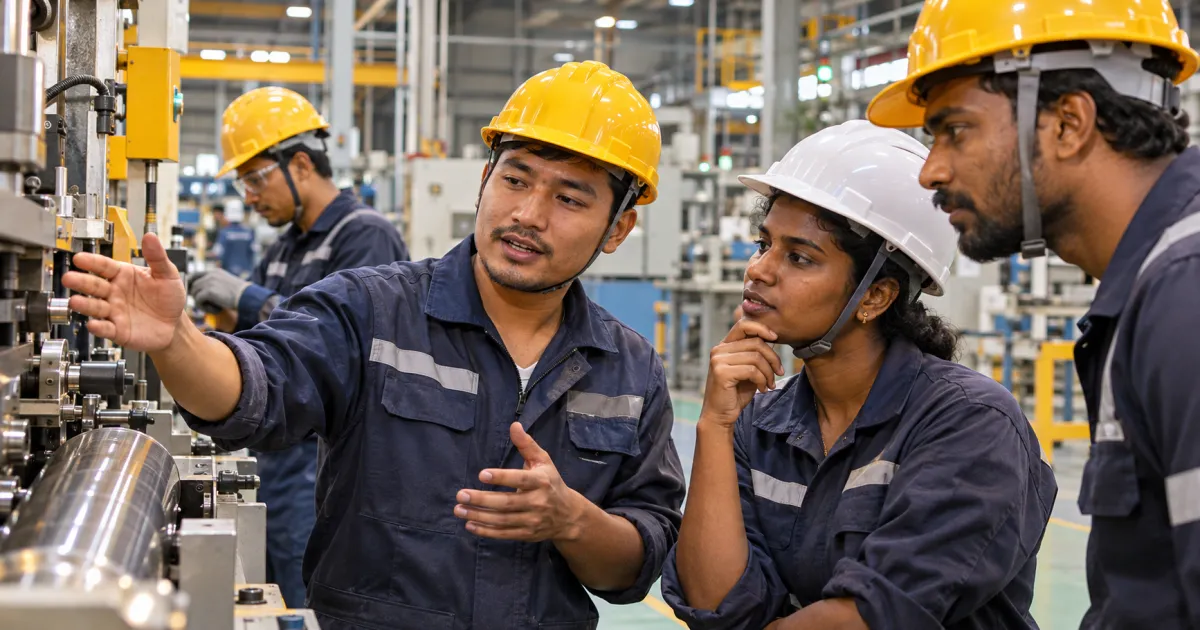
How you apply depends on the kind of job. Professional and specialist roles, such as engineering, IT, teaching or research, are filled through normal applications: you send documents, sit interviews and the employer then sponsors your visa. Factory, farm, fishing and construction jobs under the Employment Permit System, the E-9 route, work differently. The Ministry of Employment and Labor explains that small firms which cannot find Korean workers can hire non-professional foreign workers with a government employment permit.
Under the Act on the Employment of Foreign Workers, the ministry keeps a list of foreign job seekers prepared with the labour authority of each sending country. Getting on the list requires the Korean language test, and the ministry can also assess skills. Employers do not advertise to you directly. Instead, an employment office recommends suitable people from the list to an employer who has failed to hire Koreans. The enforcement decree lists what can be evaluated: skills for the business category, physical fitness and work experience. For this route, your test scores and skills test matter more than a polished CV.
The Korean CV
For professional jobs, many companies use their own online form or a standard template rather than a free format document. The usual sections are:
- Personal details: name, contact details, nationality and visa status. Many employers still ask for a recent formal photo.
- Education: in reverse order, with dates, school, major and grades if they are good.
- Work history: employer, dates, job title and main duties, with numbers where you can show results.
- Certificates and languages: licences, technical certificates and test scores, especially TOPIK for Korean.
- Self introduction: a separate essay, often with set questions about your growth, strengths and weaknesses, why you chose the company and your plans after joining.
Keep it accurate and consistent. Employers often ask for certificates of degree, career and qualifications to prove what you wrote, and false information is a common reason for an offer to be withdrawn.
What employers may not ask for
Article 4-3 of the Fair Hiring Procedure Act bans employers from asking applicants to include, or prove, information that is not needed for the job:
- Physical conditions such as appearance, height and weight
- Place of birth, marital status and property
- The education, jobs and property of parents, children, brothers and sisters
The act applies to workplaces with at least 30 regular employees, and breaking this rule can bring an administrative fine of up to 5 million won. Employers also may not make you pay for the hiring process beyond the cost of sending your documents. If you are not hired, you can ask for paper documents to be returned. The enforcement decree says the employer sets the period for that request at between 14 and 180 days after the decision.
Smaller firms are not covered by the act, so you may still be asked personal questions there. You can decline politely and steer back to your skills.
Interviews
Large companies often run several rounds: an aptitude or skills test, a team or job interview, and a final interview with senior managers. Group interviews and discussion rounds are common for graduate jobs.
- Dress formally and arrive early. A dark suit is the safe choice.
- Greet each interviewer with a slight bow, and wait to be invited to sit.
- Speak calmly and give concrete examples. Modesty works better than strong self promotion.
- Expect questions on why you want to live in Korea, how long you plan to stay and how you will adapt.
- Show some Korean, even basic phrases, as it signals commitment.
- Senior staff value loyalty and teamwork, so talk about how you work with others.
After the interview
Results are usually sent by email or text. The Fair Hiring Procedure Act requires employers to tell applicants without delay whether they have been hired. If you get an offer, check the job title and duties match your visa category before you accept, because your residence status depends on the work you actually do.
Questions people ask
Do I need a photo on a Korean CV?
Many Korean employers still ask for a recent formal photo. The law does not ban photos, but it bans demands for height, weight and similar physical details at firms with 30 or more staff.
Can a Korean employer ask about my marital status?
Firms with at least 30 regular employees may not ask you to include marital status, place of birth or property in your application, unless it is needed for the job.
What is a self introduction essay?
A separate document many Korean firms request, answering set questions about your background, strengths, motives for applying and future plans.
How are E-9 factory workers chosen?
From a government list of job seekers built with sending countries. Candidates must pass the Korean language test, and skills and fitness can be evaluated.
Can I get my application documents back?
Yes, if you are not hired and submitted paper documents on request. The employer sets a request period of 14 to 180 days.
Official sources: Korea Legislation Research Institute: Fair Hiring Procedure Act, Korea Legislation Research Institute: Enforcement Decree of the Fair Hiring Procedure Act, Korea Legislation Research Institute: Act on the Employment of Foreign Workers, Korea Legislation Research Institute: Enforcement Decree of the Act on the Employment of Foreign Workers, Ministry of Employment and Labor: International Cooperation and EPS